“what is it?” Wednesday #111

Standard

It’s that time again!

Welcome back to play “what is it?” Wednesday. Take a good look at the photo below and leave us your guess as a comment. Stop back in this Friday to find out the identity of this week’s item and read the guesses. (We don’t post them right away so the fun isn’t spoiled for others who arrive later to play.)

HmmMMmmMmmmmm…. what is it?

what is it 111

Summer 2013 issue – sneak peek!

Standard

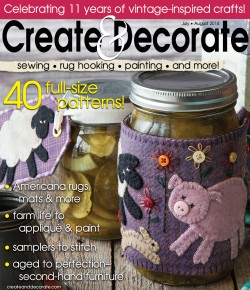
It’s a pre-mag party! You are cordially invited to peek into the summer issue. (This July/August issue will be on newsstands June 11, and subscribers will begin receiving their copy by the end of the month.) Woohoo to fun summer crafting!

WWMAR05 PGS.06-07

Visit our website to sign up under our Keep in Touch sign for free projects, craftblast emails, craft product giveaways, and more!

Take a peek into the issue by clicking HERE! Enjoy!

how to make a daisy chain

Standard

This post is prompted by one of our readers who inquired how to make a daisy bracelet after reading our Here comes summer post. Although a fresh daisy bracelet has a short life, we are certain that this fun little summertime craft memory will last a long, long time. (Remember to take a pic!)

???????????????????????????????????????

(This sweet photo was found on dreamstime.com)

This terrific step-by-step was found on wikihow.com (with some of our own creative input!):

  • Pick about a dozen healthy, fully open, daisies with medium to long stems. Be sure to check for bugs as to avoid any surprises!
     
  • Strip the leaves off the stems.
  • Pick three daisies (with different length stems) and start braiding. Try to avoid bunching all the flowers in one spot.
  • When one of the stems runs out, tuck in the end. (This is similar to French braiding your hair!) Take another daisy and tuck it into the braid near the end. Use this stem along with the two that still remain to continue braiding.
  • Continue with this method, adding in a new daisy when one runs out, until you have a rope of daisies of the desired length(Make a long length to slip over your head for a necklace, or measure your wrist as you braid to know length for ending chain.)
  • Take the last daisy and pinch off the blossom. Weave about half of it into one end of the daisy rope. Weave the other half into the other end.
  • Tuck in any loose ends that slipped out of place and enjoy your sunny summertime smile!

Here comes summer!

Standard

We thought this post worthy of a re-post:

This summer will be different

Every summer we find ourselves in the overly air-conditioned office, looking longingly out the window—Noelle dreaming of sitting in a chair on the lawn with a good book in her lap, and Beverly longing to be digging in the flower beds. We all experience summer remorse, don’t we? Truthfully, we really only need moments of summer “fixes” to get us through the work week. Well, seize the summer, friends! We are offering you a “How to Create & Decorate your summer” list to enjoy the little things in life. Find time to enjoy the little things that make you smile, evoke memories, and maybe even begin a tradition!

Your summer homework

1. Save the image (below) to your desktop to print.

2. Print the list and hang on the refrigerator as your summer reminder.

3. Seize the summer!

tea towels

Standard

We have a book review for you, and a project (see below), to boot!

WWMAR05 PGS.06-07

thread and bobbin

21 simple sewing projects

by Alison Newman & Kaitlin White

Photography by Charles Witte

- – - – - – - – - – - – - – - – - – - – - – - – - – - – - – - – - – - – - – - – - – - – - – - – -

This book is available to purchase (of course), click on over!

- – - – - – - – - – - – - – - – - – - – - – - – - – - – - – - – - – - – - – - – - – - – - – - – -

This user-friendly book is filled with 21 fun and unique projects for everyone from the beginner to the seasoned sewer.

Detailed instructions and lots of diagrams make the sewing novice feel comfortable, while a comprehensive glossary and a technique section build confidence and skills.

Decorate your home, create one-of-a-kind accessories, and make last-minute gifts—thread & bobbin proves that handmade can be chic, stylish, and fun!

- – - – - – - – - – - – - – - – - – - – - – - – - – - – - – - – - – - – - – - – - – - – - – - – -

Add a splash of color to a functional tea towel with this easy appliqué design. (Pattern below!)

tea towels

Finished Size: 171⁄2″ x 26″

Skill Level: Beginner

Fabric (makes two)

• 15⁄8 yards linen or four premade tea towels with hemmed edges removed

• Scrap orange floral

• Scrap orange print

• 1⁄4 yard lightweight white fabric

Supplies & Notions

• White thread

• Heat transfer pencil

• Embroidery floss (we used olive green)

• Embroidery needle

• 8″ embroidery hoop

• Basic sewing supplies

Cutting

From the linen: Four 18″ x 261⁄2 ” panels (for bases)

From the orange floral scrap:

Two 2″ x 6″ pieces (for hanging loops)

Cutting Appliqué Pieces

Note: Refer to Faced Appliqué on page 93. Use patterns given on the pull-out pattern sheets to cut pieces.

From the orange floral scrap:

One Vase 1

One Vase 2

From the orange print scrap:

One Vase 2

One Vase 1

Two Vase 2

Instructions

Embroider the Herbs

Note: You will need one Herb A, one Herb B, and one reversed Herb B. The patterns given are used for the tea towel with two motifs. For the herb motif used on the second towel, place the Herb B embroidery design against a window. Trace the design onto the back side of the paper to create the reversed pattern.

1. Trace the embroidery patterns found on the pull-out pattern sheets using a heat transfer pencil. Roughly cut out the patterns. Position Herb A, face down, in the bottom left hand corner of one of the linen base pieces at least 2″ from the left edge and 61⁄4″ from the bottom edge.

herb dia one

2. Position Herb B, face down, to the right of Herb A at least 7″ from the left edge and 4″ from the bottom edge.

3. Position the reversed Herb B, face down, in the bottom right hand corner of one of the linen base pieces at least 21⁄4″ from the right edge and 4″ from the bottom edge.

Herb dia 2

4. Using a hot iron, press the paper patterns until the heat transfers the pencil lines. Remove the patterns.

5. Embroider on the transferred lines using a backstitch

Add the Vases

1. Prepare the vases for appliqué according to the Faced Appliqué instructions on page 93.

2. Arrange the vases on the linen bases so it looks like the herbs are coming out of each vase. Pin in place and machine stitch very close to the edge all around using a straight stitch. Backtack at the beginning and end of each stitching line.

Add the Hanging Loops

1. Turn the long sides of each 2″ x 6″ orange floral piece 1⁄2″ to the wrong side and press. Fold in half along the length with wrong sides together. Press. Stitch on both long sides 1⁄8″ from the edge.

2. Fold the strips in half to create 3″ loops.

3. Pin the loops in the center of the top right-side edge on the embroidered bases, aligning raw edges. Baste in place.

hanging loop

Finish the Tea Towels

1. Place an embroidered base and a plain 18″ x 261⁄2″ linen base right sides together. Pin, then stitch around the perimeter using a 1⁄4″ seam allowance. Leave a 3″ opening in one side for turning.

2. Clip the corners, turn the towel right side out through the 3″ opening and press. Turn the opening edges to the inside. Slipstitch the opening closed.

3. Topstitch around the perimeter of the towel 1⁄4″ from the edge.

4. Repeat to complete the second towel.

Herb A

Herb B

vases